

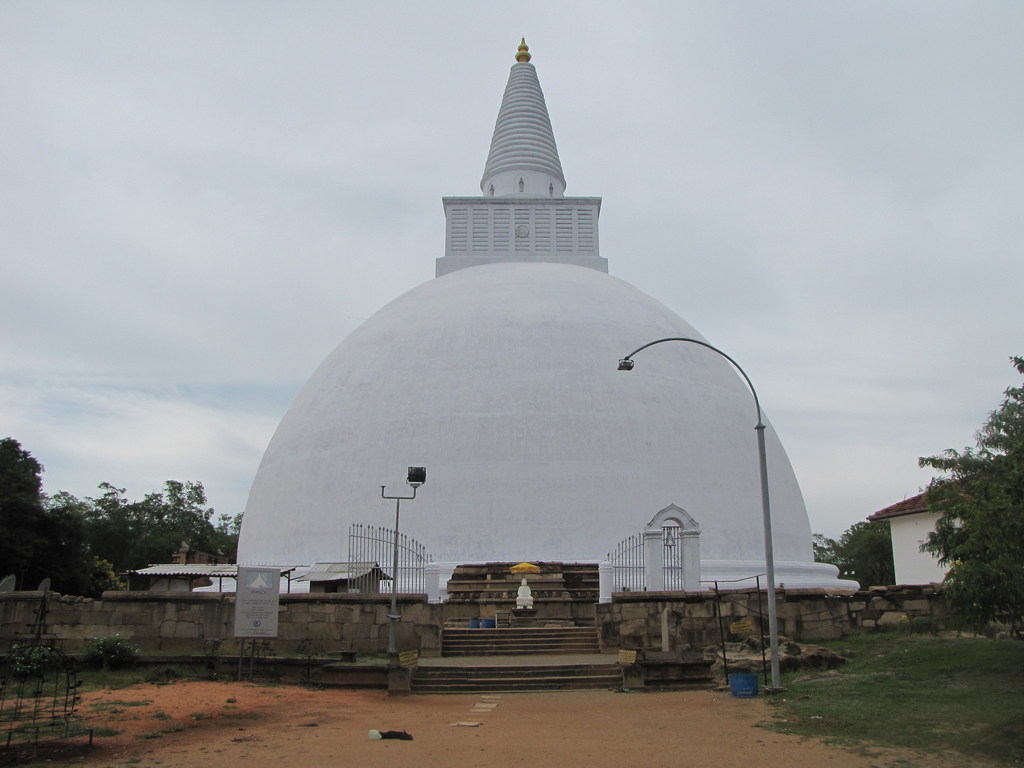
Mirisaveti Stupa
- Year of Erection: The Mirisaveti Stupa was constructed in 2nd century BCE, specifically around 140 BCE, during the reign of King Dutugemunu, one of Sri Lanka’s greatest kings, who is renowned for his military conquests and support of Buddhism.
- Historical Background: The Mirisaveti Stupa was built by King Dutugemunu to commemorate his victory over King Elara, a Tamil ruler of Anuradhapura, and to mark the completion of his great military campaign. After defeating King Elara and securing his reign over Sri Lanka, King Dutugemunu dedicated this stupa to the Buddha and his teachings, as a token of gratitude for the divine assistance he believed had helped him during his conquest.
The story behind the Mirisaveti Stupa is tied to a legend involving the king’s mother and a miraculous event. According to the legend, King Dutugemunu’s mother had prepared a special curry (containing miris or chili) for her son. After his victory, Dutugemunu, in gratitude, vowed to build a stupa and named it Mirisaveti, reflecting the significance of the miris (chili) in the legendary tale.
The Mirisaveti Stupa was also built to house relics of the Buddha and to serve as a center of worship. It is part of the larger Buddhist monastery complex that once included monastic quarters, meditation halls, and ritual spaces used by monks. The stupa stands as a testament to Dutugemunu’s commitment to Buddhism and his role in the establishment of Buddhist rule in Sri Lanka.
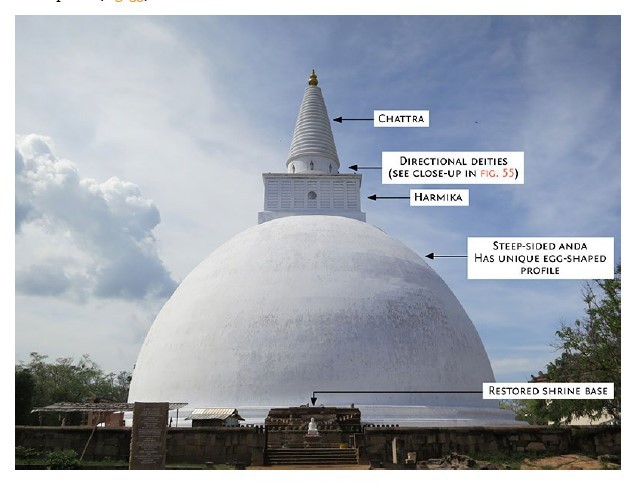 Architectural Features and Symbolism of the Mirisaveti Stupa
The Mirisaveti Stupa is hemispherical in shape, following the traditional stupa design, symbolizing the cosmos and the path to enlightenment. While the stupa has undergone renovations and restorations over the centuries, the original structure is believed to have been built with great attention to detail and architectural precision. The stupa’s height and proportions signify the spiritual ascent one must undertake on the path to Nirvana.
The stupa is surrounded by stone steps, with pillars that once supported a ritual railing, indicating the sacred nature of the site. At its base, the stupa’s design includes a platform for offerings and prayers, where devotees and monks alike could perform worship rituals. The base of the stupa also features stone carvings that represent Buddhist motifs, such as lotus petals and sacred symbols, further emphasizing the spiritual significance of the structure.