

from 0,00$/day
Book Now

Mirisaveti Monastery Complex

Mirisaveti Monastery Complex at Anuradhapura

The Mirisaveti Monastery complex is one of the most important and historically significant Buddhist sites in Anuradhapura, Sri Lanka’s ancient capital. Anuradhapura, which served as the island’s capital for over a millennium, is renowned for its ancient Buddhist monuments, including stupas, monasteries, and sacred trees, which have been central to the Buddhist culture of Sri Lanka.

The Mirisaveti Monastery is particularly notable because of the Mirisaveti Stupa, which stands as a prominent symbol of devotion and historical significance. The site is also associated with the legend of King Dutugemunu, one of Sri Lanka’s most celebrated kings, who played a crucial role in unifying the island and promoting Buddhism.

Mirisaveti Stupa

  • Year of Erection: The Mirisaveti Stupa was constructed in 2nd century BCE, specifically around 140 BCE, during the reign of King Dutugemunu, one of Sri Lanka’s greatest kings, who is renowned for his military conquests and support of Buddhism.
  • Historical Background: The Mirisaveti Stupa was built by King Dutugemunu to commemorate his victory over King Elara, a Tamil ruler of Anuradhapura, and to mark the completion of his great military campaign. After defeating King Elara and securing his reign over Sri Lanka, King Dutugemunu dedicated this stupa to the Buddha and his teachings, as a token of gratitude for the divine assistance he believed had helped him during his conquest.

The story behind the Mirisaveti Stupa is tied to a legend involving the king’s mother and a miraculous event. According to the legend, King Dutugemunu’s mother had prepared a special curry (containing miris or chili) for her son. After his victory, Dutugemunu, in gratitude, vowed to build a stupa and named it Mirisaveti, reflecting the significance of the miris (chili) in the legendary tale.

The Mirisaveti Stupa was also built to house relics of the Buddha and to serve as a center of worship. It is part of the larger Buddhist monastery complex that once included monastic quarters, meditation halls, and ritual spaces used by monks. The stupa stands as a testament to Dutugemunu’s commitment to Buddhism and his role in the establishment of Buddhist rule in Sri Lanka.
Architectural Features and Symbolism of the Mirisaveti Stupa

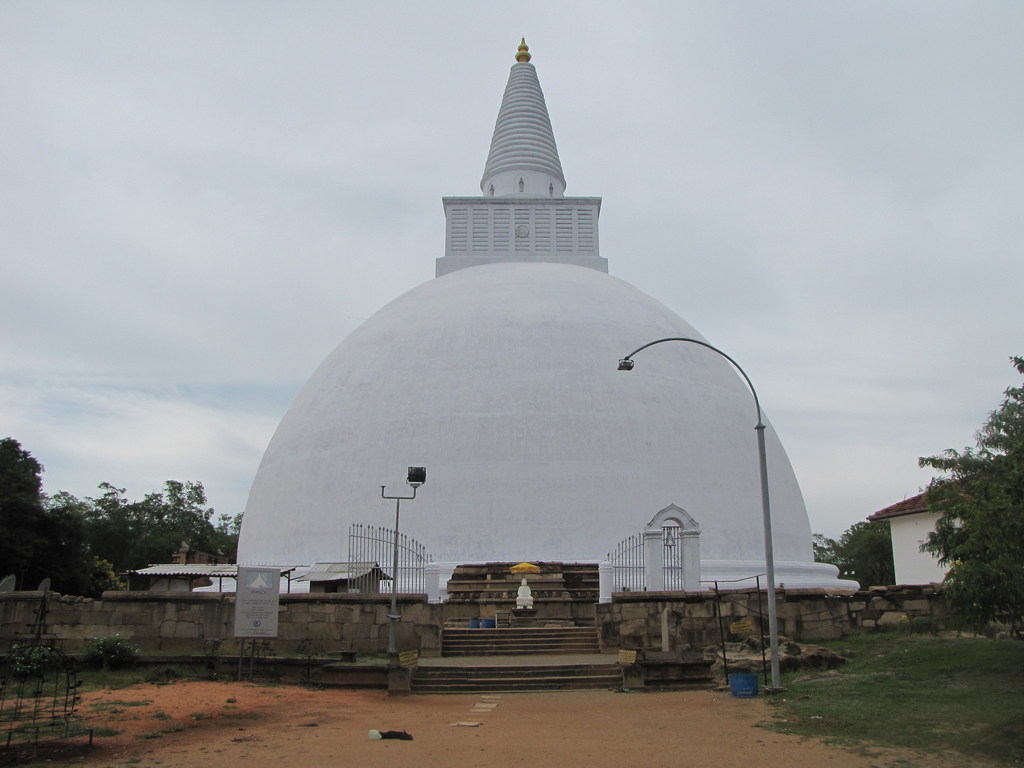
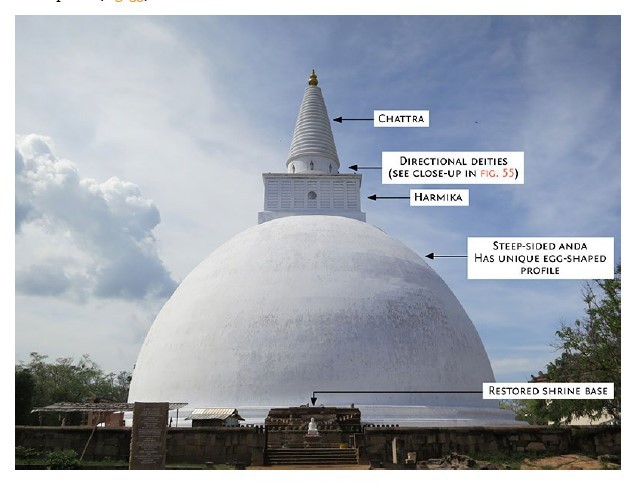
The Mirisaveti Stupa is hemispherical in shape, following the traditional stupa design, symbolizing the cosmos and the path to enlightenment. While the stupa has undergone renovations and restorations over the centuries, the original structure is believed to have been built with great attention to detail and architectural precision. The stupa’s height and proportions signify the spiritual ascent one must undertake on the path to Nirvana.

The stupa is surrounded by stone steps, with pillars that once supported a ritual railing, indicating the sacred nature of the site. At its base, the stupa’s design includes a platform for offerings and prayers, where devotees and monks alike could perform worship rituals. The base of the stupa also features stone carvings that represent Buddhist motifs, such as lotus petals and sacred symbols, further emphasizing the spiritual significance of the structure.

Significance of the Mirisaveti Stupa

  • Victory and Gratitude: The Mirisaveti Stupa symbolizes King Dutugemunu’s military victory over King Elara, but it also represents his devotion to Buddhism. By constructing the stupa, Dutugemunu sought to honor the Buddha and dedicate his success to the Buddha’s teachings. This act of devotional offering to the Buddha represents the deep spiritual connection between the king and his religious faith.
  • Symbol of Protection and Blessing: The Mirisaveti Stupa is not only a site of worship but also a symbol of protection. Its presence in Anuradhapura marks the divine guardianship over the capital, offering blessings of peace, prosperity, and spiritual wisdom to the people of Sri Lanka. For centuries, this stupa has served as a spiritual anchor for the people, offering a space for meditation, rituals, and pilgrimage.
  • Cultural Legacy: The Mirisaveti Stupa holds deep cultural significance as it reflects the fusion of Buddhist beliefs with the Sri Lankan royal tradition. The stupa’s creation symbolizes the harmonization of governance and religion, a concept that was vital to the success of the early Sinhalese kingdoms. The stupa’s construction also signified the strength and integrity of the Buddhist monastic system that flourished in Anuradhapura.

Modern-Day Relevance

Today, the Mirisaveti Stupa continues to be an important pilgrimage site for Buddhists, attracting pilgrims and tourists who come to admire its historical significance and architectural beauty. It stands as a symbol of the enduring legacy of King Dutugemunu’s devotion to Buddhism and his sacrifice for the establishment of Buddhist rule in Sri Lanka.

The restoration and preservation of the Mirisaveti Stupa continue, with ongoing efforts to maintain its historical authenticity and spiritual value. It remains a spiritual beacon, reminding visitors of the long history of Sri Lankan Buddhism and the importance of the Buddha’s teachings in guiding the people toward a path of peace, wisdom, and enlightenment.

Conclusion

The Mirisaveti Stupa is one of the most important and revered religious monuments in Sri Lanka, both in terms of spiritual significance and historical importance. Built by King Dutugemunu in the 2nd century BCE, it reflects the king’s military victory, his devotion to Buddhism, and his desire to offer a lasting symbol of peace and spiritual devotion to the people of Sri Lanka.

The stupa’s architectural features, including its hemispherical shape, pillared platform, and intricate stone carvings, demonstrate the artistic sophistication of the time and its enduring spiritual significance. For centuries, the Mirisaveti Stupa has stood as a symbol of gratitude to the Buddha, a reminder of King Dutugemunu’s devotion, and a spiritual landmark in Sri Lanka’s Buddhist history.

The Mirisaveti Monastery and its associated stupa continue to be a source of inspiration, offering spiritual guidance to the people and a powerful reminder of the Buddha’s teachings.

Conclusion: The Abhayagiri Monastery Complex

The Abhayagiri Monastery Complex is a testament to the grandeur and spiritual significance of ancient Sri Lankan Buddhist culture. From the Abhayagiri Stupa and Samadhi Buddha Statue to the Ratna Prasada, Mahasena’s Palace, and the Elephant Pond, each structure plays an integral role in the religious and cultural history of Anuradhapura. The advanced architectural designs, artistic sculptures, and spiritual relics within the complex continue to inspire both pilgrims and tourists who visit this sacred site.

The Abhayagiri Monastery remains one of the most important historical and religious sites in Sri Lanka, offering invaluable insights into the Buddhist monastic life and the lasting legacy of King Mahasena and King Vattagamani Abhaya‘s contributions to the spread of Buddhism across the island.

Similar Attractions

Related Destination

Anuradhapura