
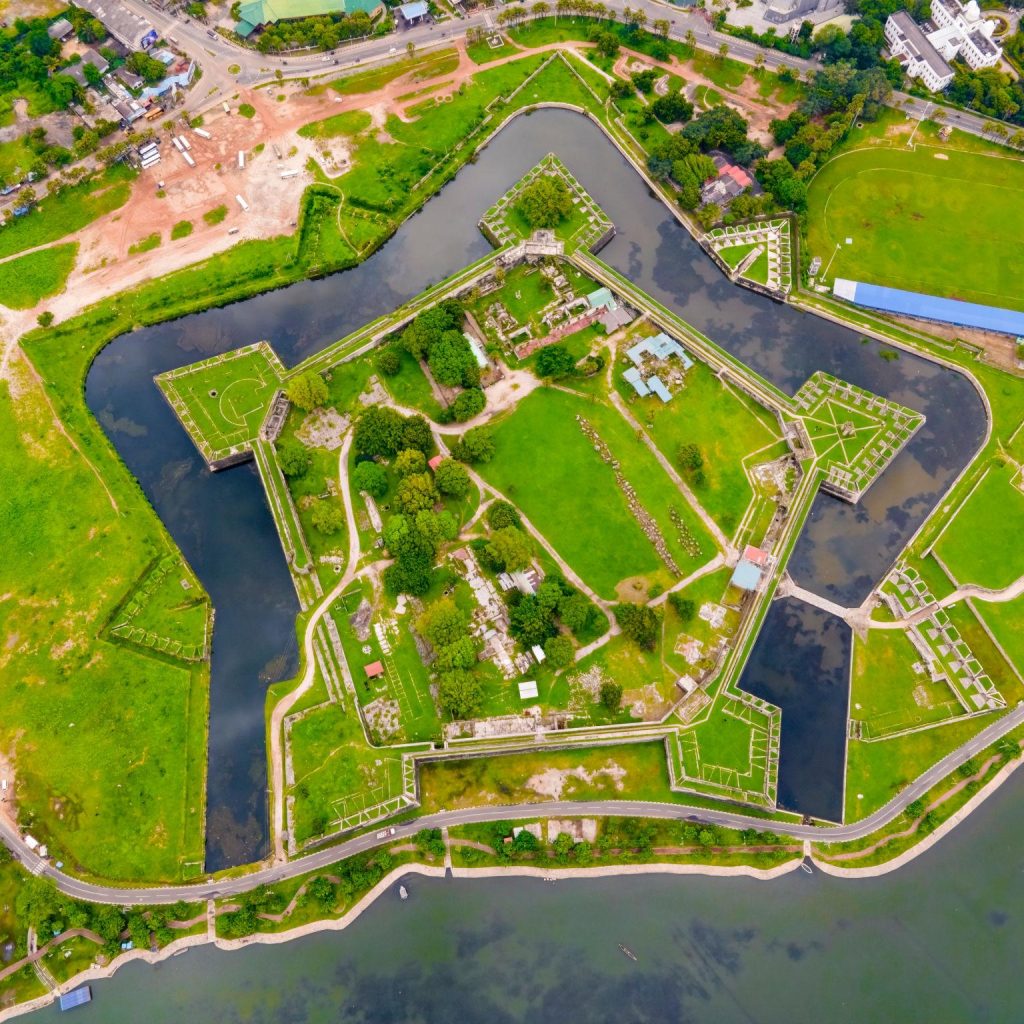
Jaffna Dutch fort was originally built by the Portuguese in 1618 under Philip De Olivera following the Portuguese invasion of Jaffna. The fort is located near Karaiyur. Due to numerous miracles attributed to the statue of Virgin Mary in the church inside the fort, Jaffna Fort was named as Fortress of Our Lady of Miracles of Jafanapatão (Fortaleza de Nossa Senhora dos Milagres de Jafanapatão). It was captured by the Dutch under Rijcklof van Goens in 1658 who expanded it. In 1795, it was taken over by the British, and remained under the control of a British garrison till 1948. As the only large military fort in the country, due to the presence of only government and military buildings within its ramparts, it was garrisoned by a detachment of the Ceylon Army.
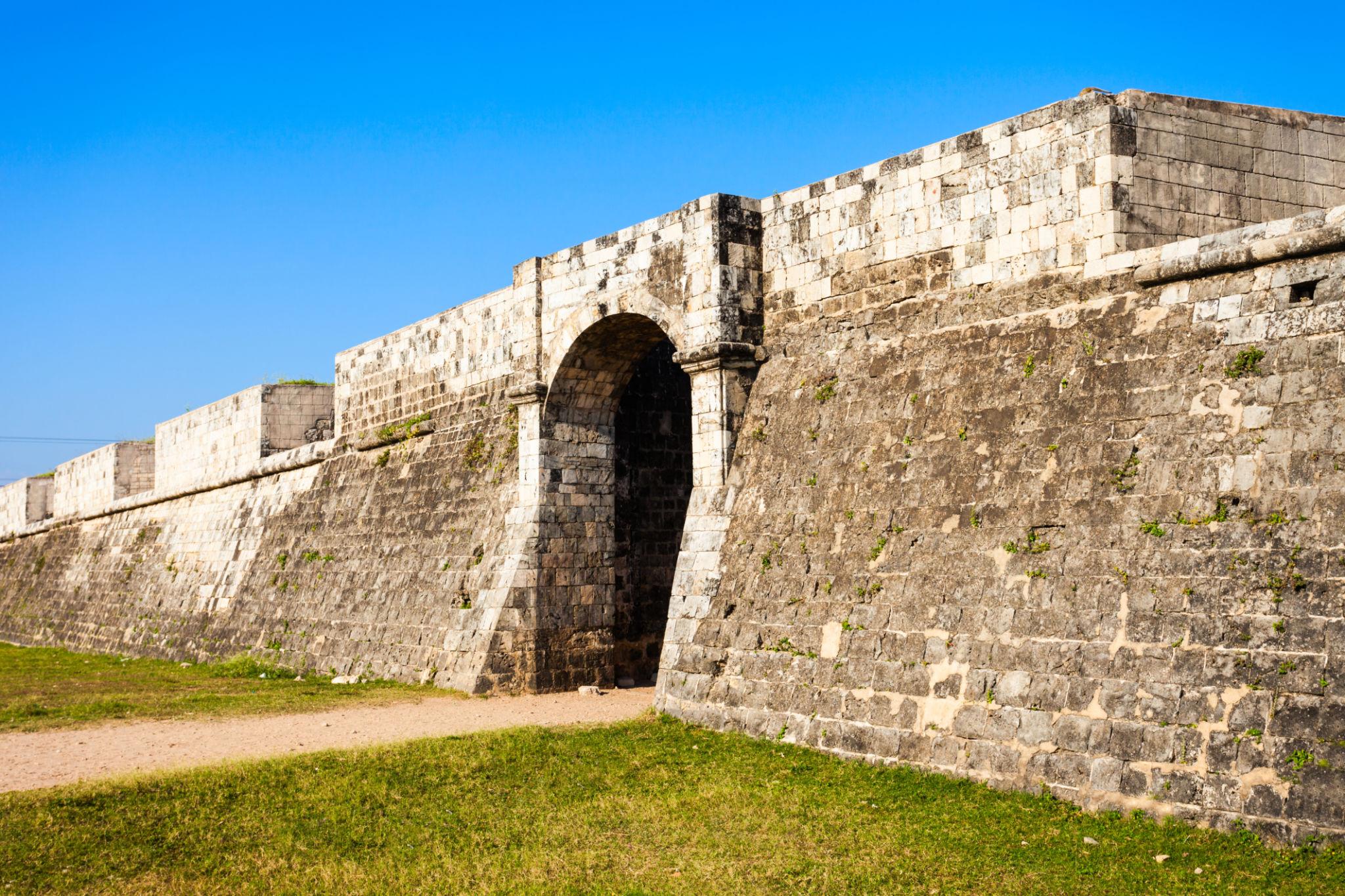
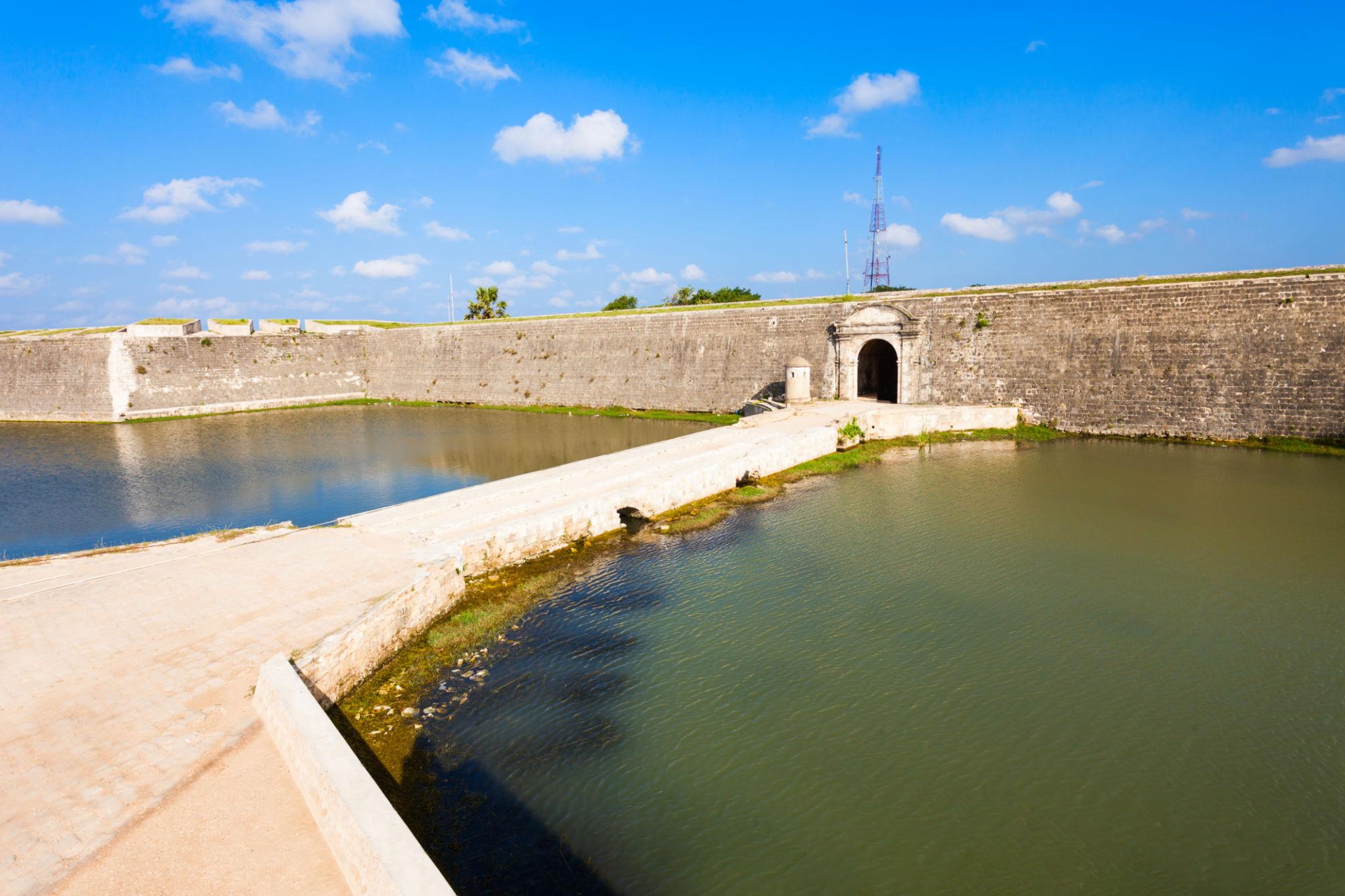
Designed according to the principles of Dutch military engineering, the fort features massive granite ramparts, defensive bastions, moats, gateways, and thick walls capable of withstanding attacks from both land and sea. The star-shaped layout allowed defenders to maintain clear lines of sight across the surrounding landscape while protecting access to the harbour and lagoon.
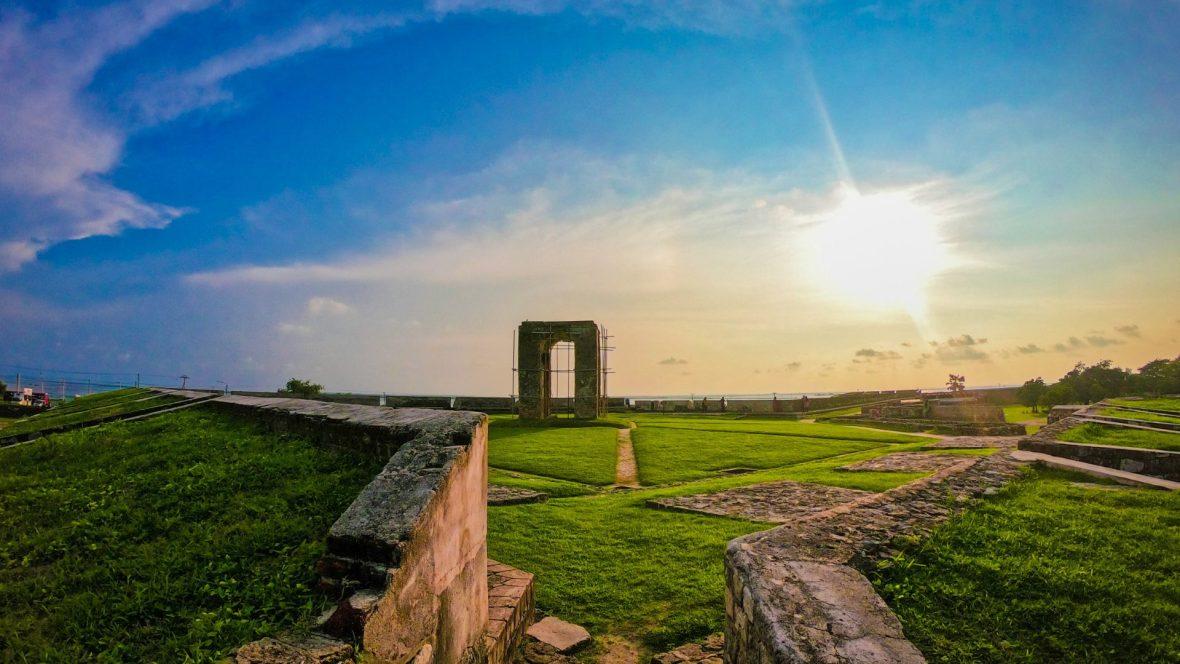
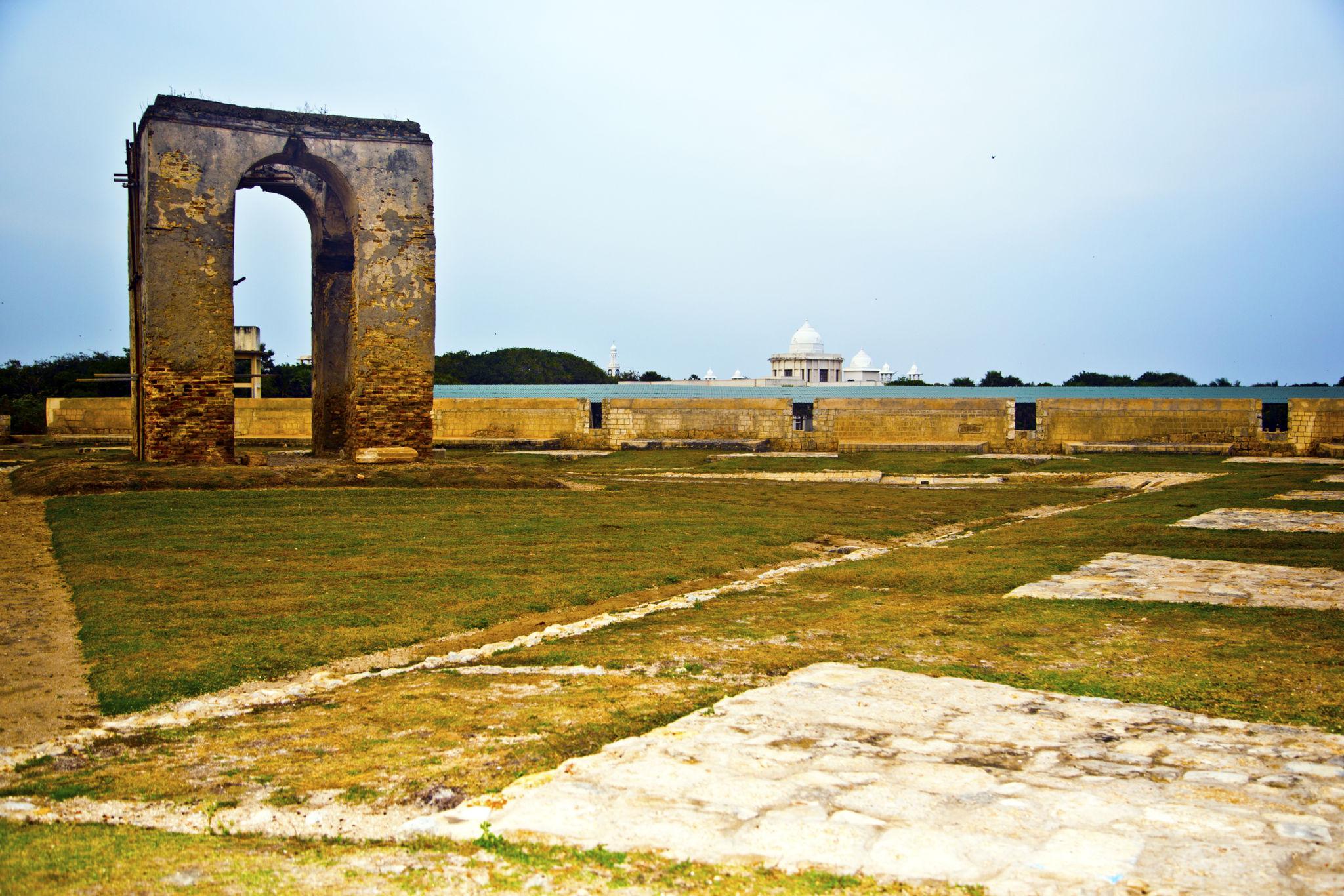
Within the fort complex, visitors can explore the remains of colonial administrative buildings, military barracks, warehouses, churches, and residential quarters that once formed a thriving colonial settlement. Although many structures suffered damage during periods of conflict in Sri Lanka’s recent history, ongoing restoration efforts have helped preserve the fort’s historic character and cultural significance.
Walking along the ancient ramparts offers breathtaking panoramic views of Jaffna Lagoon, nearby islands, fishing communities, and the surrounding cityscape. During sunrise and sunset, the fort becomes particularly photogenic as golden light reflects across the calm lagoon waters and illuminates the centuries-old stone walls.
Beyond its architectural value, Jaffna Fort tells the story of the many civilizations that have influenced Northern Sri Lanka over the centuries. The site reflects the legacy of the ancient Jaffna Kingdom, Portuguese colonisation, Dutch administration, British rule, and the resilience of local communities that continue to preserve their heritage.
Today, Jaffna Fort is one of the most visited attractions in Northern Sri Lanka and an essential stop for travellers interested in history, architecture, photography, and cultural exploration. Whether wandering through its historic gateways, admiring its impressive fortifications, or enjoying the peaceful lagoon views, visitors gain a deeper appreciation for Jaffna’s rich and complex past.