

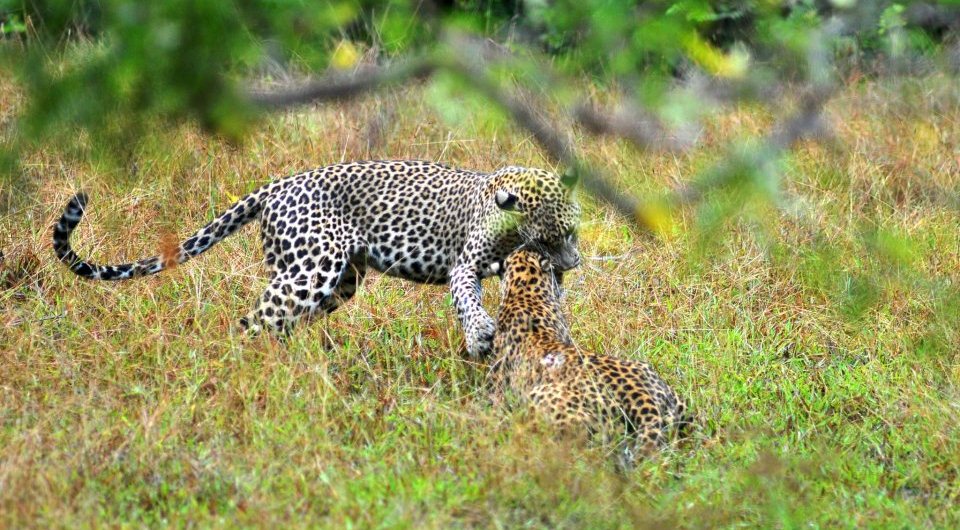
At the break of dawn, our lone safari jeep slipped into Wilpattu National Park along sandy tracks fringed by salt grass and whispering palms. As the first pale light seeped across the plains, the air held a cool promise, and the park’s hundred-odd villus lay quiet in their sandy beds, awaiting the day’s first visitors.
Wilpattu was officially gazetted on 25 December 1938 under the Fauna and Flora Protection Ordinance, making it one of Sri Lanka’s oldest national parks. Spanning approximately 1,317 km² of the island’s dry lowlands, its terrain is sculpted by three distinct vegetation zones—salt grass and low scrub, monsoon scrub, and monsoon forest—and punctuated by seasonal natural lakes known as villus. Annual rainfall of around 1,000 mm falls mainly during the northeast monsoon and inter-monsoonal showers, while temperatures average 27.2 °C across the park’s 0–152 m elevation range.
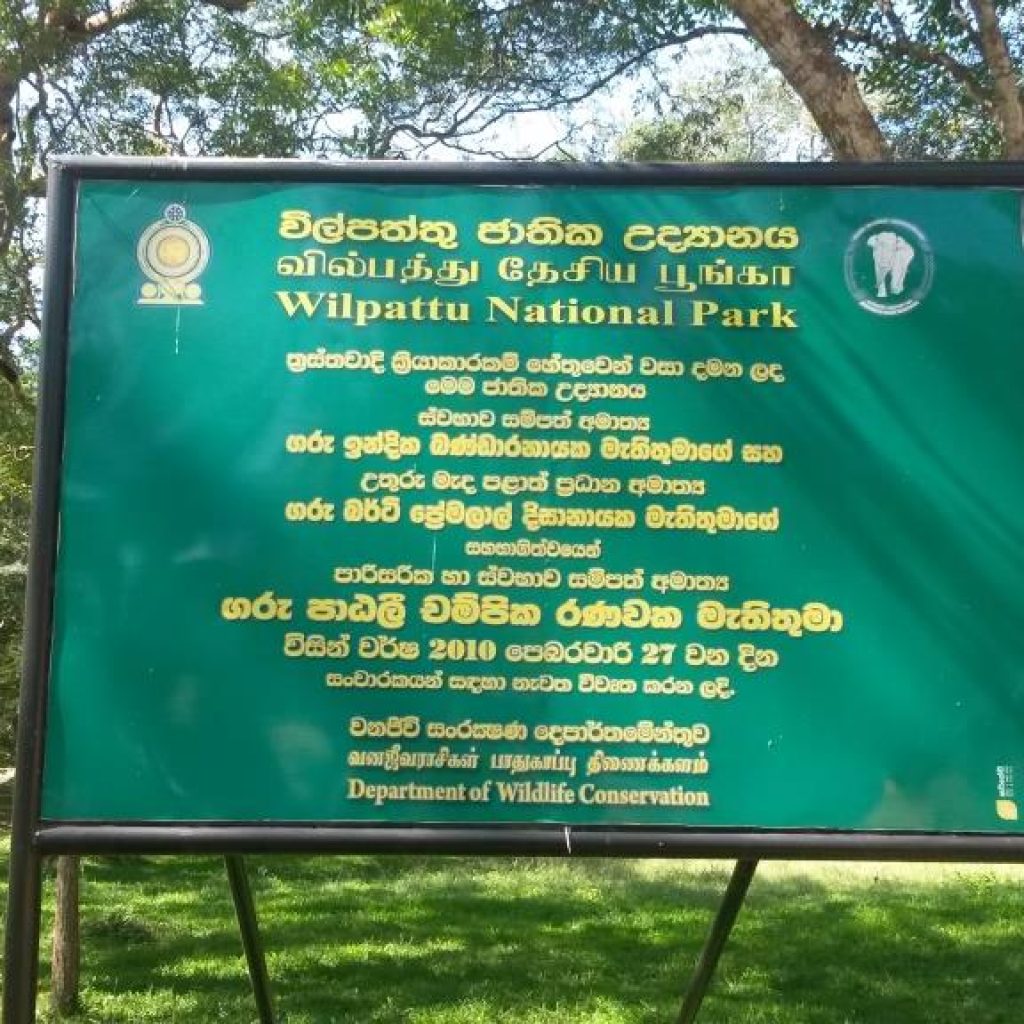
Access to Wilpattu is concentrated through the main Hunuwilgama entrance, which handles ticketing and safari departures, and a secondary northern gate reserved for research. Today, only about 25 % of the park is open to visitors, reflecting a management plan that balances protected core habitats with controlled eco-tourism.
Beneath a canopy of palu (Manilkara hexandra), satinwood, ebony, and weera, over 600 plant species flourish—from littoral salt marsh grasses to tall emergent trees. This vegetative patchwork provides forage for sambar and axis deer, and cover for predators. Along the dried villus edges, aquatic plants give way to grasses like Imperata cylindrica and Panicum maximum, crucial during the lean season.
Our dawn safari unfolded as a single, continuous journey. First, a startled herd of spotted deer melted into the monsoon scrub, their white-spotted coats trembling in the morning light. High above, Serpent Eagles and Crested Hawk-Eagles circled, their calls echoing across the flats. Then, as the sun crested the horizon, we encountered our rarest sighting: a young Sri Lankan sloth bear, clawing at termite mounds beside the track. He paused to inspect us with curious eyes before vanishing into the forest.
Minutes later, word crackled from our tracker: another bear, this one sprawled in the upper branches of a palu tree. In the gentle glow of dawn, his scarred coat gleamed as he lounged like a silent sentinel above the woodland floor.
Pressing on, we skirted dried-out villus where every remnant pool teemed with waterbirds. Flashes of pink told of Painted Storks, while Lesser Adjutants stood like silent sentries. A flock of whistling teal and pintail skittered across glassy reflections. At one such pool, a lone Sri Lankan leopard emerged. He prowled the shore with feline grace, paused to drink deeply, then marked his territory before slipping away into the undergrowth—truly the prince of the wild.
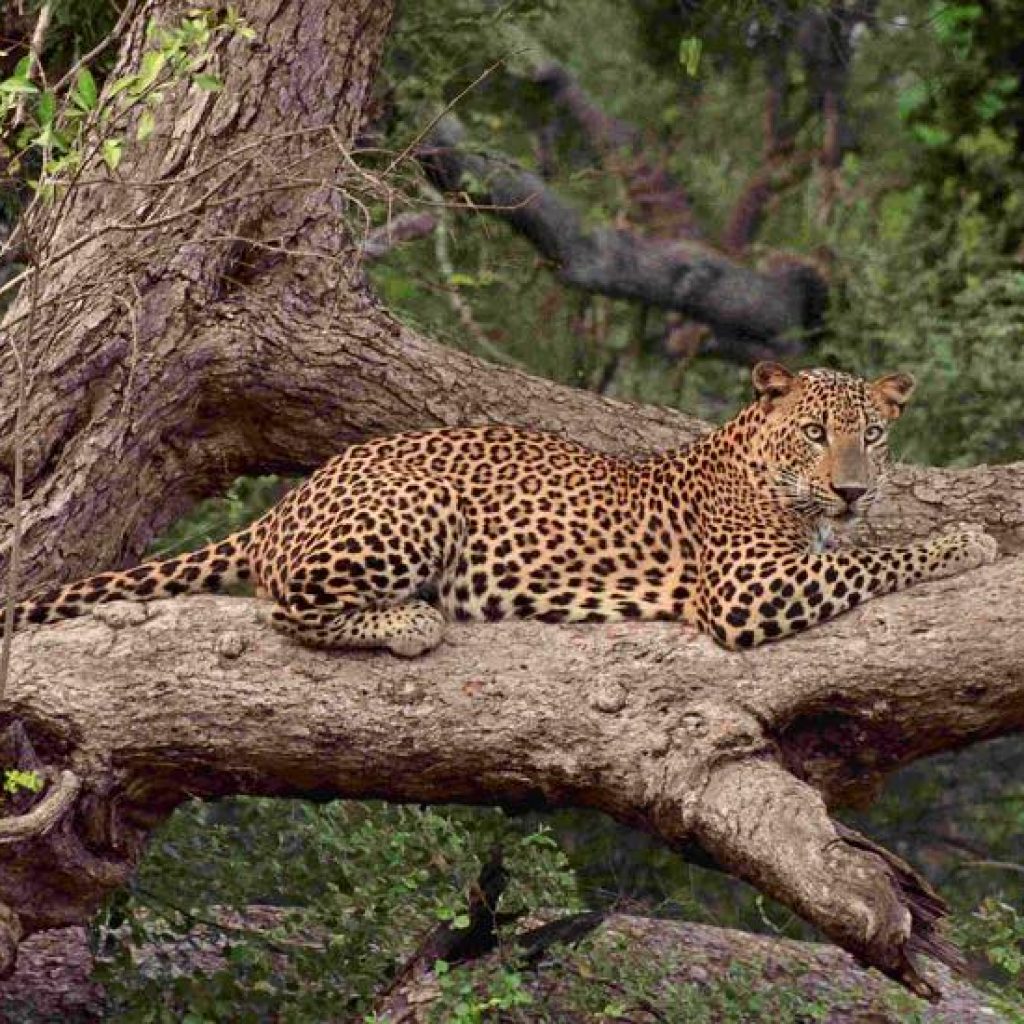
As our single safari wound toward its close, a solitary female elephant materialized among the trees, plucking tender shoots with deliberate care. Nearby, three mugger crocodiles lay sunning on a bank, their armor-plated backs barely stirring. In that fragile golden hour, we glimpsed Wilpattu’s signature “Big Three” in one continuous adventure: elephant, leopard, and sloth bear.
Wilpattu’s careful zoning, guided by the Department of Wildlife Conservation’s management plan, ensures that such moments endure. Beyond the core, water buffalo, langurs, foxes, mongooses, cobras, pythons, and an astonishing array of birdlife complete the park’s tapestry, yet it is in the hush of dawn that the sanctuary’s true soul is revealed.
Stepping back onto the lodge’s wooden deck as the sun climbed high, we carried with us the park’s slow-beating pulse—the echo of distant calls, the rustle of leaves, and the timeless rhythm of wildlife reclaiming the light.

Comment (0)