
from 0,00$/day
Book Now

Gal Vihara Complex

The Gal Vihara Complex at Polonnaruwa

The Gal Vihara Complex in Polonnaruwa is one of Sri Lanka’s most iconic and awe-inspiring Buddhist sites, known for its rock-carved Buddha statues that are some of the finest examples of ancient Sri Lankan stone carving and artistry. Dating back to the 12th century AD during the reign of King Parakramabahu I, the complex consists of four major Buddha statues carved directly into the rock face. These statues not only showcase the advanced artistic and sculptural techniques of ancient Sri Lanka but also convey deep religious symbolism related to the Buddha’s life and teachings.

The Gal Vihara Complex stands as a testament to the medieval Buddhist culture of Sri Lanka, offering visitors a chance to witness the artistic magnificence and spiritual depth of the ancient kingdom. The statues are remarkable for their expressive forms, attention to detail, and symbolic positioning.

Two Seated Buddha Statues

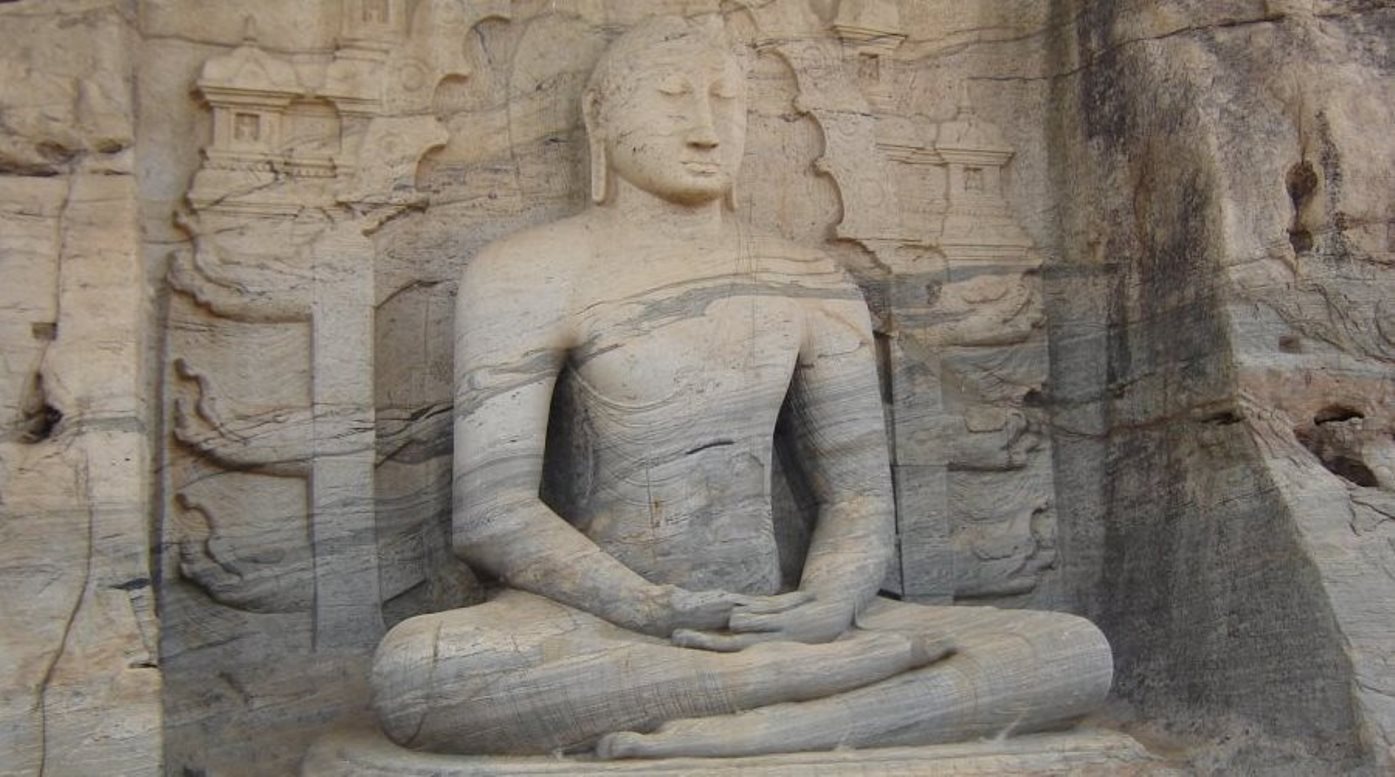
The two seated Buddha statues at the Gal Vihara Complex are perhaps the most striking and well-preserved examples of Buddhist sculpture in Sri Lanka. They are carved into the rock face and represent the Buddha in meditative poses, symbolizing the Buddha’s enlightenment and his role as a teacher and spiritual guide.

  • First Seated Buddha Statue: The first seated Buddha statue is depicted in a lotus position (Padmasana), with the right hand raised in the gesture of Bhumisparsha Mudra—the gesture of touching the earth. This mudra represents the Buddha’s moment of enlightenment under the Bodhi Tree. The serene expression on the Buddha’s face, with slightly closed eyes and a calm demeanor, reflects inner peace and the profound wisdom of the Buddha.
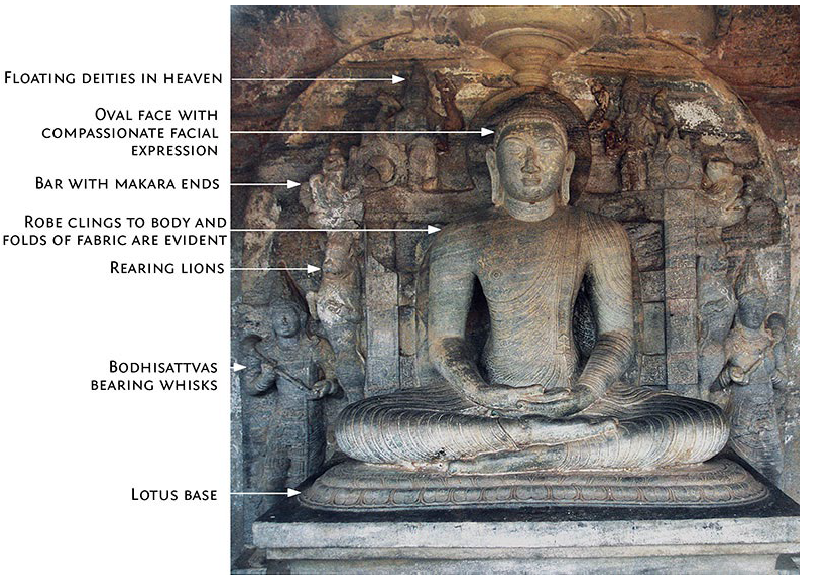
  • Second Seated Buddha Statue: The second seated statue is also in a meditative posture but is distinguished by the position of the hands. Here, the Buddha is depicted in a slightly different mudra, typically the Dharmachakra Mudra, which symbolizes the turning of the Wheel of Dharma—the Buddha’s teachings. The graceful and detailed carving of the robe, the Buddha’s facial features, and the peaceful surroundings exude a sense of spiritual serenity, offering an image of the Buddha imparting wisdom and teachings to his followers.

Both statues are masterpieces of stone craftsmanship, with highly detailed robes, symmetrical facial features, and elegant hands that give them a lifelike quality. They are not just religious symbols but also showcase the artistic sophistication that Sri Lankan sculptors achieved during the Polonnaruwa period.
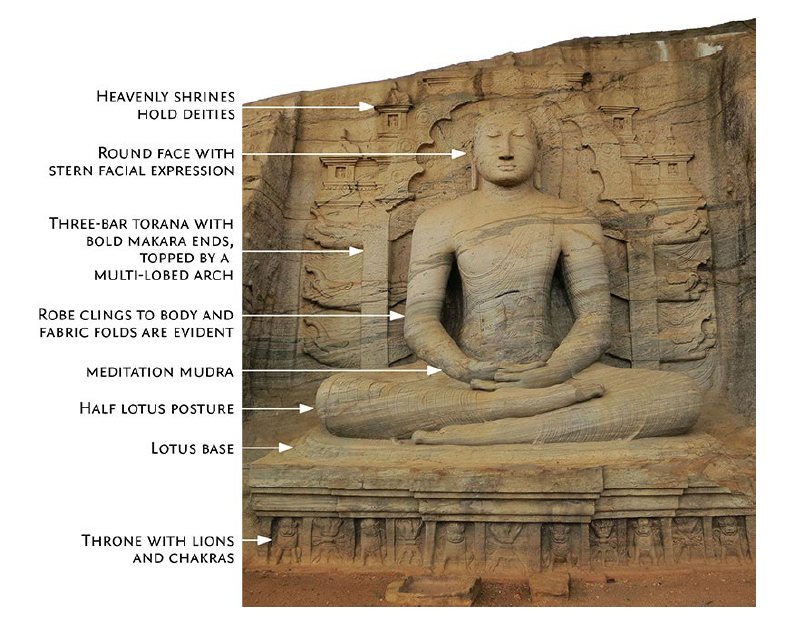
Gal Vihara - Caved Samadhi Buddha
Gal Vihara – Caved Samadhi Buddha
Gal Vihara - Outside Samadhi Buddha
Gal Vihara – Outside Samadhi Buddha

Standing Buddha Statue

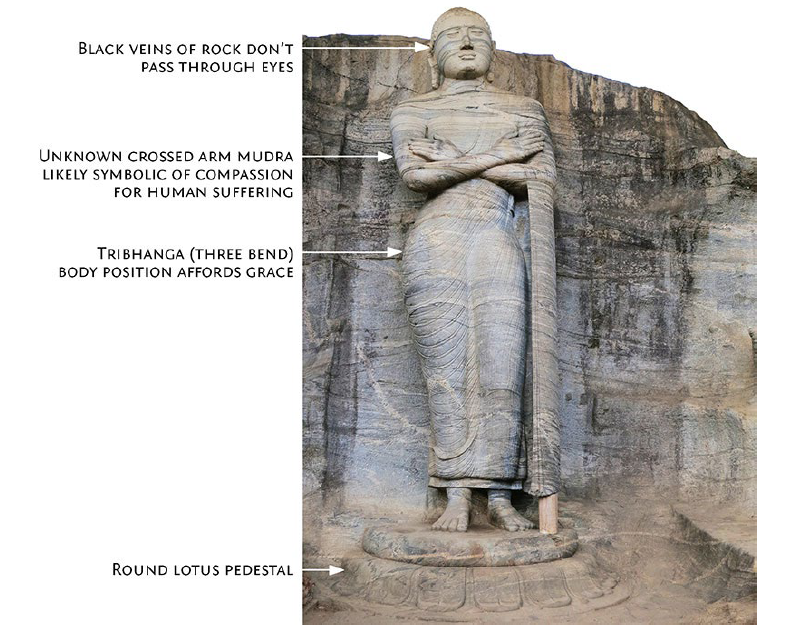
The Standing Buddha Statue at Gal Vihara is another remarkable work of art, standing at an impressive 13 feet (4 meters) tall. Carved directly into the rock, this statue portrays the Buddha in the Samabhanga posture, which is a relaxed standing position often associated with the Buddha’s teaching and mediation.

  • Gesture of Teaching (Dharmachakra Mudra): The right hand is raised in the Dharmachakra Mudra, the symbol of the Buddha turning the wheel of Dharma. The left hand is lowered with the palm facing inward in a gesture of reassurance and protection for his followers.

The standing statue captures the Buddha in a serene, almost ethereal state, with the body’s proportions carefully balanced to emphasize the grace and majesty of the figure. The carving of the flowing robes is incredibly detailed, with folds and creases creating a sense of movement, while the facial features are calm, composed, and full of wisdom. This statue is often seen as a symbol of the Buddha’s teaching presence, standing tall as a protector and guide for his followers.

Gal Vihara - Standing Buddha
Gal Vihara – Standing Buddha


Reclining Buddha Statue

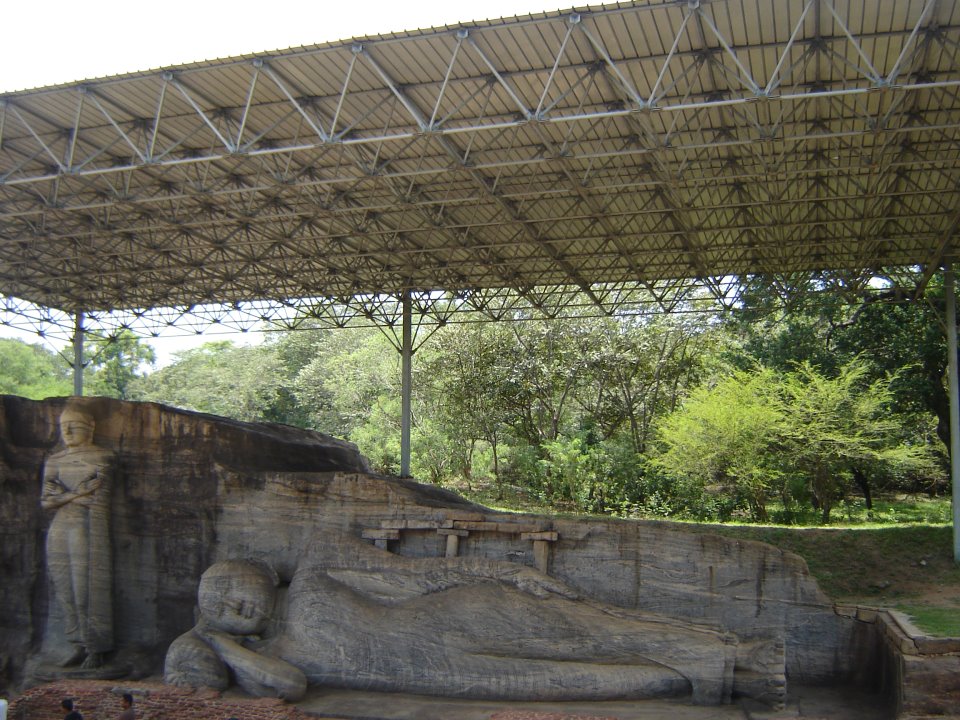
Perhaps the most famous and awe-inspiring statue in the Gal Vihara Complex is the Reclining Buddha statue. This statue, which measures 46 feet (14 meters) in length, depicts the Buddha entering Nirvana (Parinirvana), the final stage of enlightenment where the Buddha is released from the cycle of birth, death, and rebirth.

  • Symbolism of Parinirvana: The reclining posture is a powerful symbol of the Buddha’s peaceful passing, embodying the profound serenity and compassion that the Buddha exhibited throughout his life. The head is gently supported by a cushion carved from the stone, and the eyes are half-closed, suggesting a state of final rest in enlightenment.
  • The Buddha’s Final Moment: The Buddha’s hands are positioned with the right hand resting on the head, a symbol of the Buddha’s final repose, while the left hand is placed gently along his side, indicating peaceful detachment. The serene facial expression conveys the idea of acceptance and peace, while the relaxed posture of the body suggests a natural end to a journey that has been filled with profound wisdom and compassion.

The Reclining Buddha statue is remarkable for its size and expression. It is carved into a large rock outcrop and is framed by a beautifully designed stone bed. The reclining pose is set against a natural backdrop, adding to the sense of spiritual transcendence as it represents the Buddha’s final journey into Nirvana.

Conclusion: The Gal Vihara Complex

The Gal Vihara Complex in Polonnaruwa stands as one of the finest collections of Buddhist sculpture in Sri Lanka. The two seated Buddha statues, the standing Buddha, and the reclining Buddha not only represent key moments in the Buddha’s life and teachings but also serve as some of the most beautiful examples of ancient Sri Lankan stone carving.

Each statue at Gal Vihara holds deep religious significance, with its graceful forms, serene expressions, and detailed stonework that continue to inspire both visitors and devout Buddhists alike. Whether standing in meditative repose or reclining in Nirvana, these statues provide a profound spiritual experience for all who visit, offering a chance to reflect on the timeless teachings of the Buddha and the rich cultural heritage of Sri Lanka.

This “Gal Vihara Complex” provides a spiritual journey through stone, showcasing the artistry and devotion of Sri Lanka’s ancient civilizations, making it one of the most essential stops on any tour of Sri Lanka’s ancient Buddhist sites.

Similar Attractions

Related Destination

Polonnaruwa